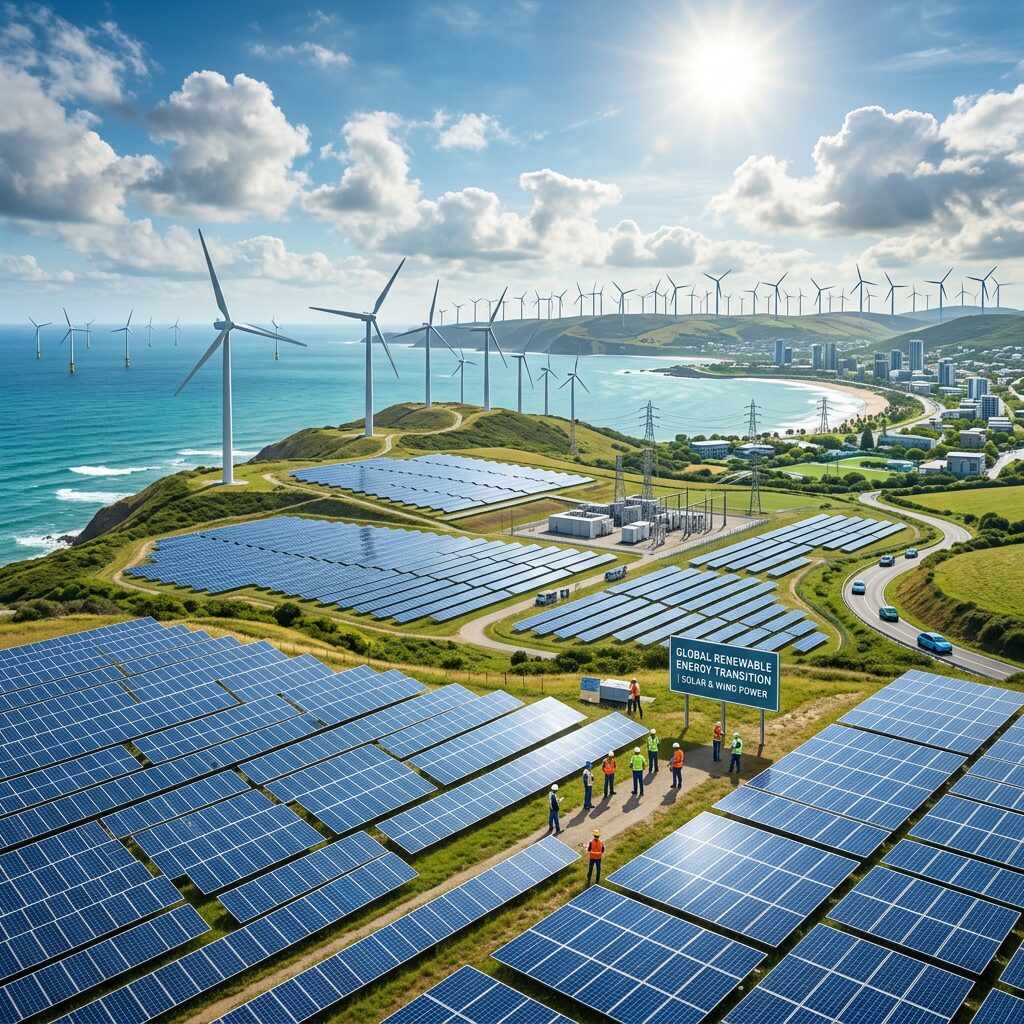
IRENA Calls for Immediate Renewable Shift Amid Global Energy Shock
The International Renewable Energy Agency (IRENA) has released a critical policy advisory urging countries worldwide to accelerate the transition to renewable energy now to counteract the ongoing global energy crisis.
As conflicts in the Middle East continue to disrupt oil and gas supplies, causing sudden and steep price increases, economies around the world face instability in food systems, transportation, and overall economic health. IRENA warns that the only way to secure long-term energy stability and protect against such fossil fuel disruptions is to pivot rapidly toward renewable energy sources like solar and wind power.
Immediate Actions Needed to Shield Essential Services
The advisory outlines urgent steps for governments to take in the next zero to six months. Protecting critical sectors such as healthcare and agriculture is paramount. IRENA emphasizes deploying small-scale renewable systems, including solar photovoltaic (PV) panels and battery-backed mini-grids, especially in vulnerable and remote communities dependent on costly diesel fuel.
Additionally, the report urges governments to ramp up public campaigns promoting energy conservation habits and to remove trade barriers on renewable technologies to speed up equipment imports such as solar panels and battery storage systems.
Midterm Strategies Focus on Infrastructure and Innovation
Looking ahead to the next six to twelve months, IRENA recommends establishing national task forces to guarantee adequate funding for renewable projects and grid upgrades. Enhancing grid flexibility through expanded battery storage and smart electricity demand management will be vital.
Clean heating solutions like heat pumps and biogas, alongside accelerated approvals for electric vehicle (EV) charging infrastructure, are highlighted as essential components in sustaining the shift toward cleaner energy and transportation.
Long-Term Policies to Drive Investment and Manufacturing
Over the coming one to three years, IRENA calls for stable, clear renewable energy policies that attract investor confidence. Building domestic manufacturing capacity for renewable tech is also crucial to reduce reliance on imports amid global uncertainties.
The report recommends that any ongoing financial aid to fossil fuel industries must be conditional on progress toward renewable adoption targets, signaling a shift in how fossil fuel subsidies are managed worldwide.
Renewable Energy Is Now a Cost-Savvy Solution
IRENA’s data shows an eye-opening 91 percent of new renewable projects completed in 2024 are more affordable than fossil fuel options. The cost of solar power has plunged by 87 percent since 2010, and battery storage costs have fallen by an astonishing 93 percent, making renewables an economically smart choice beyond environmental benefits.
Global Examples Demonstrate Renewables’ Resilience
Countries with higher renewable energy use are faring better during the current crisis. The European Union has saved billions in fossil fuel expenses through greater solar and wind power deployment. Spain and Portugal have reduced gas dependency in electricity pricing, cushioning consumers from price extremes.
China’s low reliance on oil and gas has kept it less exposed to global price shocks. Meanwhile, Pakistan and India expand solar power and electric cooking solutions, easing energy costs for households on razor-thin budgets.
Rising electric vehicle adoption, especially in nations like China and Vietnam, provides another layer of protection against volatile fuel prices, highlighting electric mobility’s role as an energy buffer.
What This Means for the United States and South Carolina
For US readers, including South Carolinians facing energy cost surges and supply uncertainty, IRENA’s call to action underscores the economic and security benefits of accelerating renewable investments. South Carolina, with its abundant solar potential, stands to benefit from policies advancing rooftop solar, battery storage, and clean transportation infrastructure, helping local economies resist global fossil fuel shocks.
Experts stress the time to act is now: deploying fast, small-scale renewable systems while building longer-term frameworks will safeguard energy access and affordability. Failure to transition swiftly risks exacerbating price spikes, supply disruptions, and economic strain.
“A faster transition to renewables is essential to ensure affordable, reliable, and secure energy for everyone,” IRENA states in the advisory.
This is a pivotal moment. With energy prices jumping unpredictably and fossil fuel markets strained by geopolitical clashes, the worldwide energy landscape is shifting rapidly. The IRENA report lays out a clear blueprint for countries like the US to embrace proven clean technologies and avoid worsening crises.
South Carolina’s energy leaders and policymakers should heed this urgent call to scale renewable energy initiatives immediately to shield communities from ongoing volatility and secure a sustainable power future.
Follow The SC Journal for continual updates on energy developments affecting South Carolina and beyond.