US Curtails Intelligence Sharing with South Korea Over Nuclear Facility Disclosure
The United States has stepped back from full intelligence sharing with South Korea after a South Korean lawmaker publicly named a North Korean uranium enrichment site, sources confirm. The move threatens a critical aspect of the US-South Korea military alliance amid growing concerns about North Korea’s nuclear weapons program.
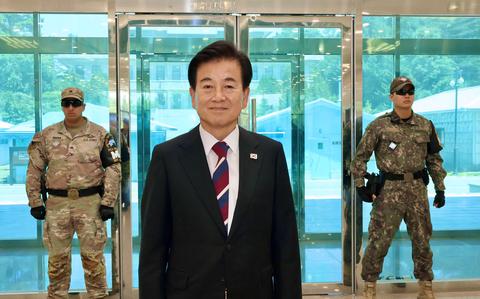
On March 6, Unification Minister Chung Dongyoung referred to North Korea’s Kusong region as the location of a uranium enrichment facility during a National Assembly committee meeting. South Korea’s Defense Intelligence Agency later designated information about the site as a classified “joint secret” shared between the United States and South Korea, emphasizing its sensitivity.
Following Chung’s disclosure, the US reportedly reduced South Korea’s access to detailed intelligence on North Korea’s nuclear sites, according to Yonhap News, which cited unnamed sources on Monday. South Korean military officials told Yonhap the restrictions have not impaired joint intelligence gathering during North Korea’s recent missile launches in March and April.
Alliance Tensions Grow as Officials Respond with Silence and Denials
US and South Korean military representatives declined to confirm or deny the reporting. A spokeswoman from Seoul’s Ministry of National Defense, Chung Binna, refrained from commenting directly but affirmed the two allies communicate closely on major security issues. She stressed real-time military intelligence coordination remains “functioning properly,” warning that public discussion of information-sharing details could harm national security and alliance trust.
Wi Sung-lac, South Korea’s national security adviser, addressed the issue from Hanoi on Thursday while accompanying President Lee Jae Myung. He said Seoul is “actively communicating with the US” to resolve the issue and declined to confirm any US restrictions, citing the sensitivity of intelligence matters. Lee publicly defended Chung’s remarks on social media, arguing the information was already publicly known.
Political Fallout and Disputed Claims Surround Leak Allegations
The incident has spurred political friction. Rep. Sung Il-jong, chair of the National Defense Committee, said Chung’s disclosure strained the alliance, claiming that the commander of US Forces Korea, Gen. Xavier Brunson, protested the breach during a meeting with South Korea’s Defense Minister Ahn Gyu-back. The Ministry later rejected Sung’s claim as “not true at all.”
Meanwhile, Chung has denied revealing classified information, insisting his comments were based on publicly accessible data. At a brief press conference last week, he described the controversy as “framing the situation as a leak.”
What This Means for US-South Korea Cooperation
The reported US intelligence limits highlight a rare moment of tension between Washington and Seoul amid ongoing efforts to curb North Korea’s advancing nuclear program. Maintaining close information exchange is crucial for coordinating responses to Pyongyang’s missile tests and ensuring military readiness on the Korean Peninsula—a matter of global and regional security.
South Korea and the United States face pressure to swiftly address trust issues while balancing transparency and operational security. Both governments continue dialogues to ease the fallout from the dispute.
For US readers, including those in South Carolina, the development underscores the fragility of intelligence partnerships in a volatile geopolitical landscape. It also signals potential challenges ahead for diplomatic and military cooperation aimed at containing North Korea’s nuclear threat.
As the situation unfolds, stakeholders worldwide will watch how this breach impacts one of America’s key Asian alliances and regional security dynamics in Northeast Asia.