Gulf of Panama’s Ocean Upwelling Fails for the First Time in Four Decades
New data confirm a historic break in the Gulf of Panama’s ocean cycle as the seasonal upwelling failed throughout 2025, leaving marine ecosystems exposed to months of unusually warm water.
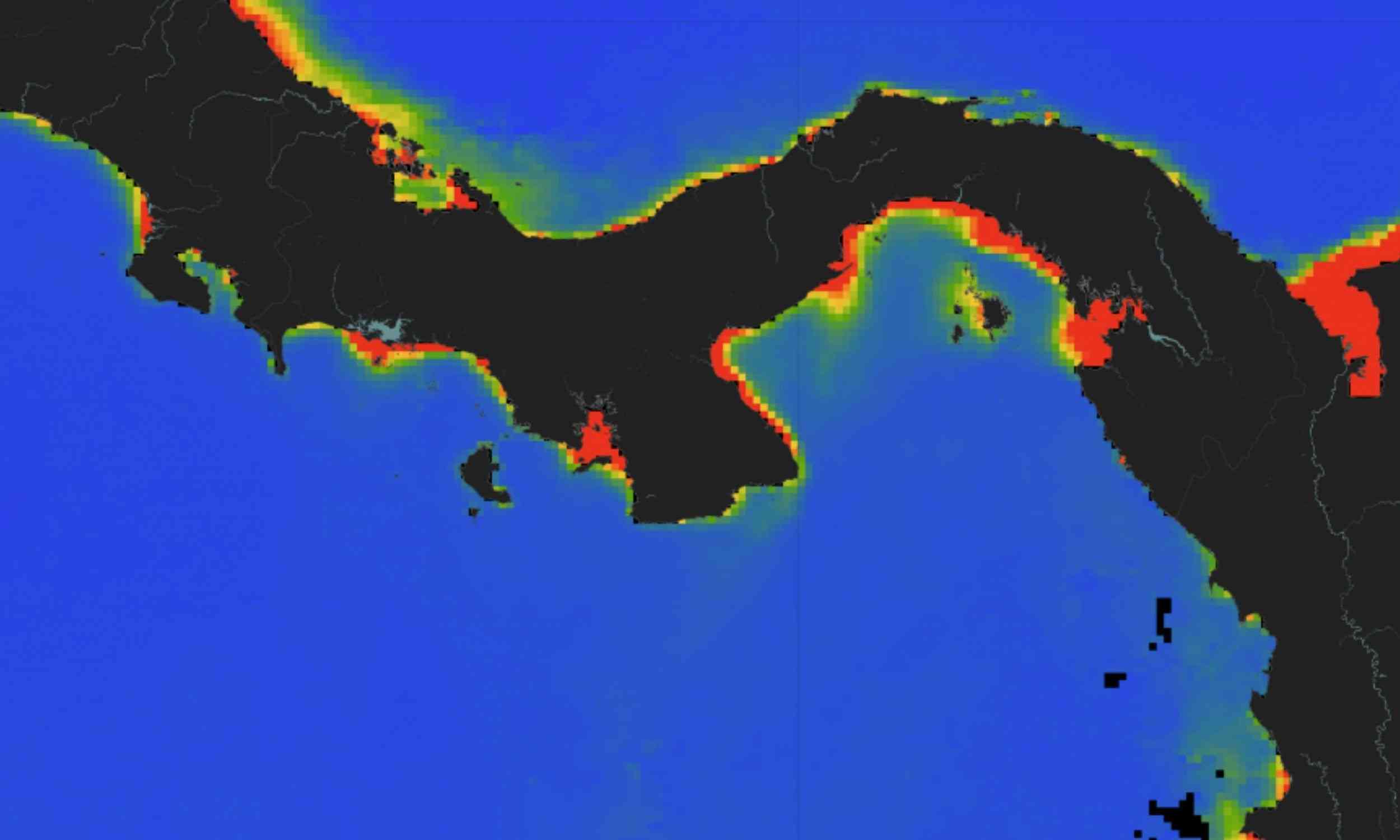
Normally, strong northerly winds push surface waters offshore each dry season, allowing cold, nutrient-rich water to rise up—a process called upwelling. This critical ocean pulse cools coastal waters and fuels phytoplankton blooms that sustain fish, reefs, and local fisheries.
But in 2025, researchers led by Aaron O’Dea documented that this vital cooling and nutrient influx completely vanished. The ocean water off Panama’s Pacific coast failed to cool until March 4, over six weeks later than the usual drop by January 20. The cooling period lasted just 12 days instead of the typical two months, and temperatures never reached the usual lows.
Wind Patterns Falter, Breaking the Ocean’s Rhythm
The failure stems from a 74 percent drop in the frequency of north-blowing winds that normally push warm surface water offshore. Although individual gusts were close to normal strength, longer lulls between wind bursts drastically reduced the total offshore push needed for upwelling.
Stratified warm water layers replaced the usual upward rise of cold water, confirmed by ocean temperature profiles collected by the S/Y Eugen Seibold, a scientific sailing vessel. Satellite and direct temperature records monitored by the Smithsonian Tropical Research Institute (STRI)–dating back to 1985 and 1995 respectively–clearly show 2025 as a historic anomaly.
Urgent Warning for Coral Reefs and Coastal Communities
The missing upwelling means coral reefs lost their typical seasonal cooling buffer during the hottest months, increasing thermal stress and the risk of bleaching. Past studies show that this annual cooling helped corals survive intense heat events like El Niño, but without it, heat damage could escalate rapidly.
For fishing communities dependent on coastal marine life, the failure hits early and hard. Plankton and small fish—the base of the food web—receive fewer nutrients, threatening fish populations critical to livelihoods and local diets.
“Panama’s 2025 upwelling failure underscores that regional-scale dynamics, rather than blanket global predictions, are essential for understanding these tropical upwelling systems,”
O’Dea emphasized, highlighting the urgent need for localized monitoring and forecasting.
Beyond Pacific Climate Cycles, What Comes Next?
While a weak La Nina was active, the gulf’s history shows it previously weathered stronger climate fluctuations without losing its seasonal cooling. Scientists now suspect broader regional changes or new climate drivers are disrupting the upwelling, not simply familiar Pacific cycles.
The question remains whether 2025 was a one-time shock or an early sign of a shifting ocean regime. Early reports for the 2026 dry season show a return of strong cooling, but experts warn that consistent monitoring is critical. Communities relying on stable catches cannot endure unpredictable ocean rhythms.
Global Implications and The Need for Better Tracking
Many tropical upwelling zones worldwide lack long-term data, leaving scientists blind to similar failures elsewhere. Panama’s extensive records make it a key sentinel for changes threatening marine food webs and coastal resilience globally.
This unprecedented failure reverberates far beyond Panama’s shores. For coastal communities from South Carolina’s coastline to the Pacific, understanding and adapting to these fast-changing marine systems is vital to protect fisheries, livelihoods, and ecosystems.
The study documenting these findings appears in the latest issue of the Proceedings of the National Academy of Sciences. As research continues, closely following seasonal changes this year will be crucial for gauging how widespread and permanent these disruptions might become.